THE MYTH OF THE MARRANO NAMES
Texto publicado em Revue des Études Juives, Tome 165, Juillet-décembre 2006, Fascicule 3-4, p.445-456.
Laboratório de Estudos sobre a Intolerância
(Labarotory for the study of Intolerance)
Universidade de São Paulo
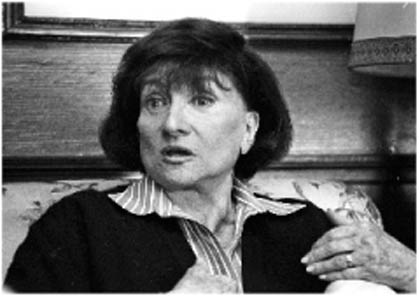
Anita Novinsky
www.usp.br/.../arquivo/2005/jusp747/pag0304.htm
The romantic historiography about the Marranos and Marranism created
a series of myths in relation to the names adopted by the Jews during and
after their forced conversion in 1497 in Portugal. The increasing interest in
Sephardic history, mainly after 1992, nourished people’s mind with fantastic
histories and legends, that made the Marrano chapter especially attractive.
The greatest impact came when historians try to prove the attachment of the
"Conversos" or New Christians to the Jewish religion and their desire to die in
kiddush-hashem. Reality was quite different. Analyzing the trials of the
Inquisition, we cannot be sure that the confessions of Judaism were true. In
torture the Anussim confessed to everything the Inquisitors wanted to hear and
they accused friends, neighbors, families. When we examine the trials
carefully, we see that the answers and terms of the confessions were always
the same, phrases and words repeated during three centuries.
The indiscriminate divulgation of the myths related to Marrano history is
dangerous, as within a few years it can lend to a distorted history of the
descent of the Anussim.1 Research on Sephardic history based entirely on
unknown manuscripts is actually been made at the University of Sao Paulo,
and it is opening new perspectives to Marrano history that will allow us to
understand better the multishaped phenomenon of Marranism.2
2
In relation to the names adopted by the Jews during the conversions of
1497, we have very rare direct references. Christian and Jewish Chronicles left
us precious reports about what happened during those troubled times but they
are silent about the Jewish patronyms names. The king Dom Manuel
authorized that certain names used exclusively by noble families could be
given to the converted Jews. By adopting those names as Noronha, Meneses,
Albuquerque, Almeida, Cunha, Pacheco, Vasconcelos, Melo, Silveira, Lima ...
the New-Christians opened new genealogical lines and during centuries they
maintained their link with Jewish roots. Spread through the portuguese empire,
the Marranos frequently carried in secret their Jewish names and transmitted
them to their descendents; those various names reveal also the double identity
of people living in a world of terror. Those names sometimes kept a meaning
and histories that were orally transmitted from one generation to another.
The symbolic of the Marrano names repeat exactly the symbolic of the
Portuguese tradition, and they represent the animal world like Leon (lion),
Carneiro (sheep), Lobo (wolf), Raposo (fox), Coelho (rabbit), the vegetal world
like Pinheiro (pine), Carvalho (oak), Pereira (pear tree), Oliveira (olive tree),
and sometimes physical characteristics like Moreno (dark skin), Negro (black),
Branco (white) ; geographical features like Serra (mountain range), Monte
(mount), Rios (rivers), Vales (valleys); and also tools and crafts3. The most
common names among the Marranos were those that designed villages and
towns, such as Miranda, Chaves, Braganca, Oliveira, Santarem, Castelo
Branco. The Portugese had also the habit to feminize men's names, but in
Brazil this appears very seldom.
The Inquisition, as we know, persecuted Jews on a family basis, and
this was one of the reasons why the Marranos adopted simultaneously two or
3
three names, so that the work of the inquisitorial agents became more difficult
and the risk to the families smaller. In the large books where the Inquisitors
registered all the names of the prisoners suspected of Judaism, we can find
many repetitions related to the names, and sometimes the Inquisitors
themselves became confused and could not identify the suspected ones.
One thing was common: in the same family we find members using
different names. Father, mother, grand parents, brothers, adopted completely
different names one from each other.
It was also common among the Marranos to skip one or more
generations, and to return again to the ancient name of the grand parent,
although this custom existed also since a long date, among the Portuguese
Old Christians.
Marrano children, when they came to 12 or 13 years old, were taught
about the dangers they will have to face because they were descendent from
Jews and they were also told about the different names used by the family. In
Bahia, in the XVII century, we find an interesting case. At the College of the
Company of Jesus the teacher asked a small boy what was his name and the
boy answered; “Which one, the inside or the outside one”? 4 Frequently the
memory of the Jewish origin was lost, and the Marranos became aware,
through others, that they were New Christians. When inquired they frequently
answered full of pride: “New Christians by the grace of God" 5.
During the Middle Ages, when the Jews lived in Portugal in a relatively
free society, they used mainly first names taken from the Old Testamnet, but
the surnames were Portuguese, as Abraham Franco, Isaque Querido, Moises
Pinto or Moises Lobo. Soon after the forced conversion when the Hebrew
names and the Hebrew language were forbidden, we still find those Hebrew
4
names secretly transmitted among some families. But after one or two
centuries, mainly when they were already in the New World, most of the
memory of being New Christians got lost. I did not find in the Chronicles of that
time any mention to what could have been for the Jews the traumatic
experience of being forced to abandon their traditional family names. What
feelings, emotions, the Jews experienced when they had to change their
identity linked for so many centuries to their ancestors? We understand
naturally that this “changes” in the Jewish life did not occur from one moment
to another, and we have to study them considering each specific situation.
Among the numerous legends built up during centuries in relation to the
Marrano names, we frequently hear that the Jews adopted the names of their
Godfathers as of region, villages, plants, trees, fruits, geographical accidents.
It may be that these legends have some basis but in this stage of studies, it is
still difficult to separate fantasy and reality. To the drama of the conversion and
to the destruction of Iberian Judaism, it is important to add the results of new
investigations. It is also important to research the parochial Archives in each
Portuguese village where Jews lived in during the period of conversion.
The principal source for this study is the Archive of the Court of the Holy
Office of the Inquisition in Portugal. The Inquisitors ordered the registration of
the names of each Portuguese New Christian suspected of Jewish heresy in
the so called Book of Guilties. This book is the most important source we have
in order to know the Marrano names, mainly of those who remained in
Portugal or spread through the Portuguese empire. What leads to great
confusion is the fact that the names of the Marranos are exactly the same as
those used by Old Christians. How can we distinguish them? Since we don't
know, till today, any specific Portuguese document that explains us the criteria
5
used in the adoption of those names, the only possible way is to investigate
their frequency in the inquisitorial records. 6 We know that a large amount of
manuscripts belonging to the Holy Office were lost in the last centuries during
the transportation, from the National Library, where they were previously kept,
to the National Archive of the Torre de Tombo, and also through flood or
deterioration, because of the primitive conditions of the National Archive.
Today, there are approximately 40,000 trials according to some scholars, or
39,000 according to others. Almost 80% of those trials refer to the crime of
Judaism. But we will only be able to speak in terms of statistics after all the
trials and documents are examined. This work will take some more years of
research.
About Brazil we have more precise evidence. Brazil received a greater
number of New Christian emigrants from Portugal than any other region of the
world. The Portuguese archives retain a fantastic quantity of documents that
testify that emigration. I used, for this article, as a primary source The Book of
the Guilties, where I found registered 1819 names of Marranos imprisoned or
suspected of Judaism that lived in Brazil in the XVIII century.7 (1,098 men and
721 women). 1076 Brazilians were imprisoned during the colonial period and
the highest percentage of them were accused of the crime of Judaism. Only
Marrano prisoners received capital punishment. 8
The Inquisitors knew exactly through denunciations and through their
agents (spies of the Holy Office) who were the "suspected" persons that left
the Kingdom. As they left without special permission, the Inquisition
confiscated all their goods in Portugal.
When I found for the first time, in 1965 the Book of the Guilties in the
National Archive of Portugal, I immediately notified it to Dr. Daniel Cohen, who
6
was then the Director of the Central Archives for the History of the Jewish
People in Jerusalem, and after him to Dr. Aryeh Segal. They immediately
ordered to microfilm it. Unfortunately, there documents present great
difficulties for the historian.
In that paper I will not refer to the descendents of the “Anussim” who
returned to Judaism in Europe, North Africa or Levant. Their history was
frequentely written, their names are known and they already belong to Jewish
history. The purpose of my contribution tends to knowledge of the decendent
“Anussim”, forgotten by the historians, the Brazilian Marannos that during 285
years suffered discrimination and persecution from the Catholic Church.
In this article I transcribe the names of the Brazilians who persecuted by
the Inquisition from 1700 to 1761 (mainly between 1710 and 1736) and
indicate the frequency in which those names appeared in those records.
NUNES appears 120 times mentioned in the Book of the Guilties. It is
also the name given to the council and district of Vinhais, Diocese of
Braganca, but it can also have a Spanish origin.
RODRIGUES, appears among the Brazilians 137 times. It was
originated in Rodrigo but may also have a Spanish origin. It appeared in
Portugal around the 14th and 15th centuries, but there were many Rodrigues
also among the Jews who, at the end of the 16th and the beginning of the 17th
century, emigrated from Spain to Portugal. Although there must not be any
blood links between them. 9 We know the curious case of Abin Rodrigues, in
Spain, that remain popular in history; as he was at the same time a Jew, a
Christian and a Moslem.
HENRIQUES is mentioned 68 times. The origin of the name is diverse,
but since 1454 it existed in Portugal a golden coin of 22 karat, called
7
Henriques. The name became very common among the noble men as well as
among Marranos.
MENDES is mentioned 66 times. It has various origins and also comes
from the patronymic name Mendo. It is very common among New Christians.
CORREA is mentioned 51 times. It belonged to an old Portuguese
lineage, that mixed with a Moslem family from Ormuz.
LOPES is mentioned 51 times. It is a patronymic name that gave birth to
several brandies of different families. We find the Lopes in Ciudad Rodrigo, a
border town through which the Jews, expelled from Spain entered Portugal.
The Lopes also appear during the reign of Afonso V . The patronymic name
LOPES has no cross in its coat of arms, but two stars, each one of six points.
COSTA is mentioned 49 times. It is a small parish that belongs to the
Council of the District of Guimarães. It is a very old Portuguese name, known
since the time of the first king of Portugal Alfonso Henriques, which became
later very common among Old and New Christians.
CARDOSO is mentioned 48 times. It existed since 1170. It was the
name of a place in the parish of S. Martinho of the Moors. It is very common
among New Christians in the past as well among the Sephardic Jews in our
days.
SILVA is mentioned 47 times. It was an old parish in the district of
Barcleos, and it belonged to one of the most prestigious families of the Iberian
Peninsula. According to the legend, it was originated from the King of Leon. It
is very common among Portuguese ordinary people and also among New
Christians.
FONSECA is mentioned 33 times in the Book of the Guilties. It may
have Spanish origin, but it appears among the oldest Portuguese families.
8
PAREDES is mentioned 32 times. It is a small village not far from the
city of Porto. Situated in the right brach of the river Douro. There is also an old
fortress by this name.
ALVARES is mentioned 30 times. It is a parish in the Council of Goias,
district of Arganoil that belongs to the diocese of Coimbra.
MIRANDA is mentioned 28 times. It is a very common name in Portugal
and Brazil. The Jews may have adopted it from the famous Jewish village
Miranda. Nevertheless, the origin of the name remounts to from the times of
the king D. João II, when a priest, sent to France, returned with a lady named
D. Mecia Gonçalves de Miranda, who ordered that her children and descent
should be named Miranda.
FERNANDES is mentioned 28 times in the Book of Guilties. It is one of
the most commom patronymic names and also one the most popular among
the Marranos in Brazil. It means “son of Fernando” ( in Spanish Fernandez and
in Portuguese Fernandes). The origin goes back to the times of the Visigods
and it appears among the Jews since the XV century, but many families that
carry this name have no relations between them.
AZEREDO is mentioned 25 times. It is the place where laurel cherry
grows. According to some genealogists, the toponyme Azeredo is a place that
belonged to the parish Leça do Balio (north of Portugal) council of Matosinhos
in the Province of Minho.
VALLE is mentioned 24 times. It means a plain between two mountains
or at the foot of a mountain. There is an ancient Portuguese lineage that used
this name, but Jews began to used it in the XV century. It may have relation
with the fact that Jews who emigrated from Spain entered in Portugal through
the borders north of Ciudad Rodrigo and were forced to live in tents built in the
9
valley. The Jews remained in this valley during three years. In the popular
tradition this place is known as the "Valley of the Tents."
BARROS is mentioned 22 times. Up to the XV century it was spelled in
different ways, also Barrios. It appears among the Sephardim in Holland.
DIAS is mentioned 22 times. It comes from the patronymic name Diogo
or Diego; and many families without any blood links adopted that name.
XIMENES is mentioned 18 times. According to certain authors it has an
Italian origin and started with an Andre Ximenes from Florence who went to
Portugal. But the name already existed in Navarra. In the Jewish Encyclopedia
it is mentioned as a Hebrew name.
FURTADO appears 5 times. According to some authors there is a
curious legend about the name Furtado; (it means "stolen") that goes back to
the times of D. João II when the king ordered that all the Jewish children,
between 2 and 10 years should be taken away from their parents and sent to
the island of São Tomé, where many of them perished.10
We also find Jews among the first colonizers of the island Açores and
their Jewish names appear also in Brazil. As an example: the family Brum and
Colaça or Calaça. The first Brum (Wilhelm van der Bruyn) was born in
Maestrich and after his marriage he moved to the island of Madeira. There are
also Bruns in the island of Tercena and Fayal. The Bruns mixed with the
Portuguese families that already lived in the Açores and gave origin of the
Brums da Silveira and Brums da Cunha. A very important family Brum lived in
Brazil in the XVIII century and some members of this family were imprisoned
by the Inquisition.
In Brazil, the Jews could only practice freely their religion during the
period when the Dutch occupied the northeast of the State. (1630-1654).
1
There was then in Pernambuco two congregations that registered the names
of its Jewish members. Among them were those that arrived in Brazil together
with the Dutch, already born as Jews or reconverted to Judaism in
Amsterdam, and they carried Jewish names. There were also these names
wich belonged to the most ancient New Christian population which after the
arrival of the Dutch, tried to convert to Judaism. They often changed their first
names and adopted Hebrew names, but they frequently remained with their
Portuguese surnames: Duarte Saraiva became David Senior Coronel (he
adopted the name of one of his ancestors), Dr. Fernando Patto became
Abraham Israel Diaz; Luis Dormido became Daniel Dormido; Simão Franco
Drago adopted the name of Isaac Franco Drago; Francisco de Faria was
named Jacob de Faria; João de La Faye became Aron de la Faye; Gaspar
Rodriguez became Abraão Rodrigues11
In my investigations I did not find any documental proof that the names
of tree, plants fruits, geographical accidents belong only or most times to
Marranos. May be. But the most common names of Marranos I found in Brazil
are connected to cities, villages, provinces, places of their family origin. Many
“conversos” that run away from Spain and tried to find refugee in Portugal or
other countries in Europe or America adopted names that reminded them of
their place of birth in Castela.
It is interesting also to follow the changing of the Marrano names, after
their return to Judaism in Holland, England, Italy, France, Turkey and Morroco.
In England we find Lord Monfort, a member of the Monfort family that run away
from Bahia, when the Inquisition arrested the chief of the family, the medical
doctor Manoel Mendes Monforte. The Brandão family gave origin to Lord
Brandon. The Luna, Gomes, Azevedo, Rodrigues, Dias became the founding
1
fathers of the "London Congregation" in 1669. Also among the Marranos
which established in Turkey we find names that remember the land of their
origin: Leon, Callvo, Zamarro, Toledano.
Marrocan Jews emigrated to the Amazonas in the beginning of XIX
century. Their origin was from Spain, the North Africa, Brazil, and many of
them carried Hebrew names, but the surnames reveal their Portuguese origin:
Samuel or Isaac Aguiar, Levy Marques, Abraham or Salomon Salvador Pinto.
They frequently preserved names totally Portuguese as Armando Soares,
Miguel Soares, Jose Baliero de Souza, Elis José Salgado.
Also in the Balearic Islands, Spaniards and Portuguese used surnames
taken from their towns and also from colors and trees. According to a legend,
these families have Jewish roots.12
The anti-Jewish propaganda inculcated by the Catholic Clergy in the
mind of the Portuguese conditioned a whole mentality, and even men, which in
the XVIII century took position against the methods of the Holy Office when
influenced by those prejudices. We can give an example of a famous
Portuguese refugee known as Cavaleiro de Oliveira, that left us important
writings against the Holy Office. In his work Recreacão Periódica he confirms
that "there is not one only name in Portugal that does not belong,
simultaneously to the finest nobility and to the extreme lower class. Braganca,
Pereira, Mascarenhas, were names considered of the most "purest blood", but
these names are found also among the Portuguese bourgeoisie. A shoe maker
is called João de Mascarenhas, as the Marquis of Gouveia, a nobody compete
with a Marquise and Dukes.13
Living in England, the Cavaleiro de Oliveira were acquainted
Portuguese people which were arriving every day from Portugal. Among them
1
he found Marrano names that belonged to famous families, the Pereira,
Carvalho, Andrade etc. Even if he had such a critical enlightened mentality he
could not left up above his time. He tried to save "his blood" showing that rare
were those New Christians that carried the name "Oliveira". And he comments
ironically that "the ignorants of England and Holland" think that those
surnames belong only to the Jews, and they believe that every Portuguese is a
Jew. 14
It is interesting to note how strong was among the Portuguese the
preoccupation with the cleaness of their blood line. In verses they express this
obsession:
Para a conhecer os meus antepassados
Cheio de enthsiasmo, investiguei
Comecei pelos registros para guiar
E dali passar ao tanto afim
Oh! Como era bom saber que atrás de nós
Houve nomes ilustres, boa gente
Morgados militares, enfim avós
Que sempre se trataram nobremente
Com escravos, cavalos, criados
E toda a mais fidalga ostentacão
Sem nunca terem sido infamados
De ter sangue de infecta nacão.15
To know my ancestors
Full of enthusiasm, I investigated
I started form the parish records
And from there I went to the Holy Office
Oh! How good it was to know that behind
us
Were illustrious names. Good people
Majorats, soldiers, at last grandparent
That always treated themselves with
nobility
With slaves, horses, servants
And all the "noble” ostentation
Without being slandered
Of having blood of the infected nation15
After having navigated in a sea of uncertainty, what can we know about
the Marrano names? On the basis of inquisitorial sources we can say that in
Brazil:
1. The majority of the Marrano names reflect the cities or villages from
where they came.
1
2. The majority of the Marrano names were taken from the old aristocratic
families.
3. Practically all the Marrano names repeat the names of the Portuguese
families that have the coat of arms.
4. The Brazilian Marranos carried simultaneously two or three names.
5. Members of one same family frequently used totally different names.
6. After two or three generations we often find New Christians adopting
again the names of grandparents.
7. Marrano surnames are exactly the same as the surnames used by the
Old Christians.
8. Marranos who lived in Holland, North Africa, Levant and returned to
Judaism adopted many times Hebraic names, but they maintained
frequently their ancient Portuguese surnames as it gave them a certain
prestige.
Comments of the Lector: I would recommend to the author
of this important article the following bibliographic
references which would strengthen her arguments
1. Luiz De Bivar Guerroa, Um Caderno De Cristãos 0 Nevos De
Barcelos, Braga
On Marrano names - see -
2. Elias Libiner, Os Baptizados em Pé; Estudo Acerca da Origem da
Luta dos cristãos-novos em Portugal, Lisboa 1998
3. To see and compare the names of New Christians whose former
names are known, see:
Maria Jose Pimenta Ferro Tavares, Os Judeus em Portugal no
Século XV, Vol II, Lisboa 1984
1
1
On the "credibility" of the confessions see: I. Révah and Antonio José Saraiva,
Saraiva, Antonio José, Inquisição e Cristãos-Novos. Ed. Estampa, Lisboa 1985,
p.211-291, "Polemica acerca da Inquisição e Cristãos Novos" , Novinsky, Anita
"Confessa ou Morre" in SIGILA , Paris. 2000 p. 77-86.
2
Some results of those researches are already published in Gorenstein, Lina
Ferreira, Héreticos e Impuros ed. Arquivo Nacional, Rio de Janeiro, 1995;
Mizrachi, Rachel Bromberg, Um capitão - Mor Judaizante, ed. Universidade de São
Paulo, 1984; Carneiro, Maria Luiza Tucci, Racismo e Preconceito no Brasil
Colonial, ed. Brasiliense, 1988.
3
On Portuguese names see Távora, D. Luiz de Lencastre, Dicionário das
familias portugesas ed. Quetza (Lisboa, 1989)
4
Novinsky, Inquisição. Cristãos-Novos na Bahia, 2nd. Ed. Perspectiva (S.
Paulo, 1992)
5
Novinsky, Anita Cristãos-Novos na Bahia, ibid.
6
About "The Book of the Guilties" (Rol dos Culpados) see Novinsky, Anita,
“Uma Fonte Inédita para a História de Brasil”, Revista de Historia, Universidade de
S. Paulo, No. 94, 1973. p. 563-572.
7 Novinsky, Anita, Rol dos Culpados. Ed. Expressão e Cultura, Rio de Janeiro, 1992.
8
Novinsky, Anita, Prisioneiros Brasileiros na Inquisicão ed. Expressão e Cultura, Rio de Janeiro,
2002.
9
Tavora, op cit p. 307-308
10
Guide des Patronymes Juifs , Beth Hatefutsoth, Tel Aviv, 1996, p.110
11
Wiznitzer, Arnold, Os Judeus no Brazil Colonial ed. Pioneira . São Paulo 1966
p. 121
1
12
Mound Gloria, Distinctive Jewish Family Names in the Balearic Islands of
Spain in A. Demsky, J. A .Reif, J. Tabori (eds) “These are the Names” Vol 1 (1997),
p 65-82.
13
Cavaleiro de Oliveira, Recreação Periódica I. Lissabon, 1922. p. 216. XLIV.
14
Ibid.
15
Falcão, Armando Sacadura, in Távora, op cit p.12 (the verses are freely
transcribed from the Portuguese original)


